
Writing UKG Chord Progressions
Certain chord progressions just work in garage. Learn the classic progressions and jazzy extensions that define the UKG sound.
Video lesson coming soon
Introduction
UK garage has a unique harmonic language. It borrows from R&B, jazz, and house to create chord progressions that feel both sophisticated and uplifting. This lesson breaks down the theory behind UKG chords and gives you practical progressions to use.
The UKG Chord Vocabulary
UKG rarely uses simple triads. The genre is defined by extended chords—7ths, 9ths, and beyond.
Essential Chord Types
| Chord Type | Formula | Character |
|---|---|---|
| Major 7th (Maj7) | 1 - 3 - 5 - 7 | Dreamy, sophisticated |
| Minor 7th (m7) | 1 - b3 - 5 - b7 | Soulful, emotional |
| Dominant 7th (7) | 1 - 3 - 5 - b7 | Tension, movement |
| Major 9th (Maj9) | 1 - 3 - 5 - 7 - 9 | Lush, full |
| Minor 9th (m9) | 1 - b3 - 5 - b7 - 9 | Rich, deep |
Classic UKG Progressions
The ii-V-I Progression
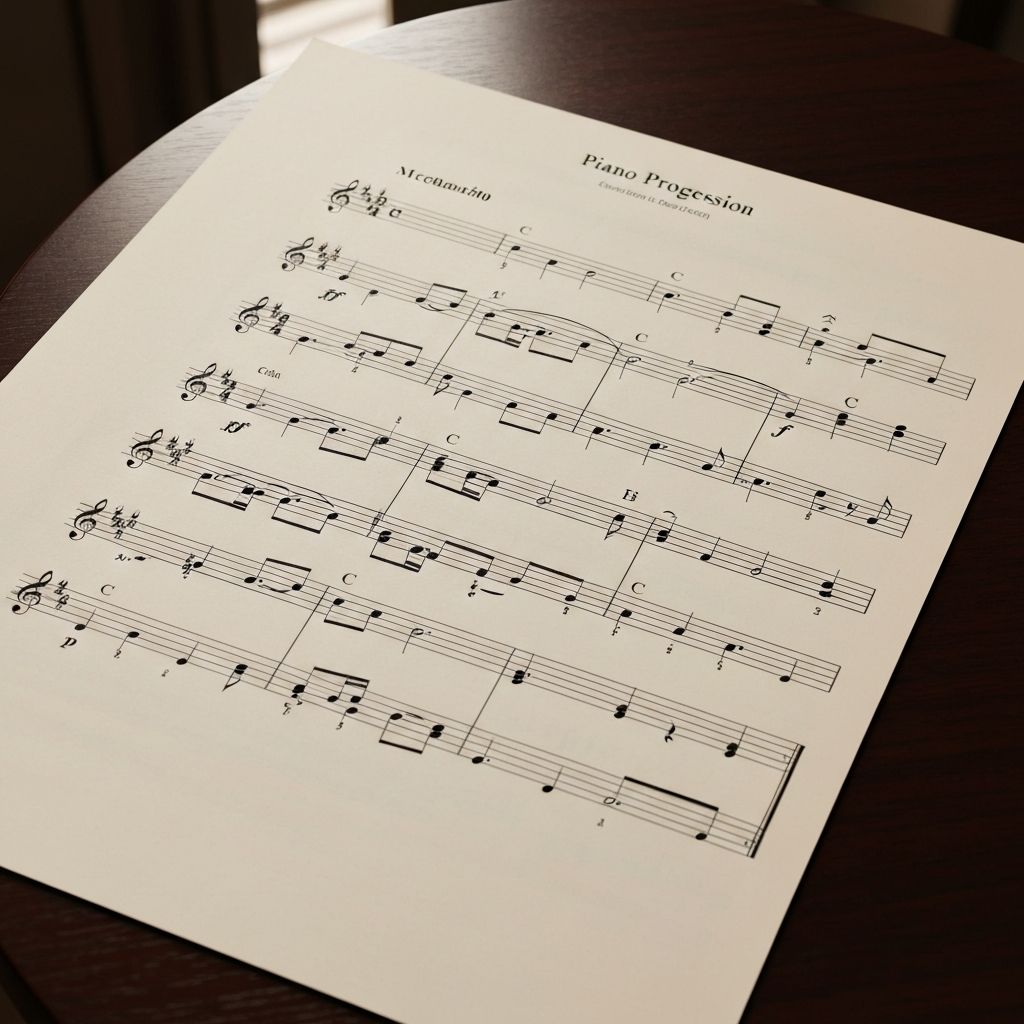
Borrowed from jazz, this is the most common progression in UKG. In the key of C major:
- Dm7 (ii) → G7 (V) → Cmaj7 (I)
This progression creates satisfying resolution while sounding sophisticated.
The I-vi-ii-V Progression
Also known as the "50s progression" or "Heart and Soul" changes. In C major:
- Cmaj7 → Am7 → Dm7 → G7
The vi-IV-I-V Progression
A more modern sound, used extensively in 2000s garage:
- Am7 → Fmaj7 → Cmaj7 → G7
Voice Leading: The Secret to Smooth Chords
Voice leading means moving between chords with minimal movement in each note. This creates a smooth, professional sound.
Using Inversions
Instead of playing every chord in root position, use inversions so the top notes stay close together:
- Root position: C - E - G - B
- 1st inversion: E - G - B - C
- 2nd inversion: G - B - C - E
- 3rd inversion: B - C - E - G
Rule of thumb: Keep the top note within a step or two when changing chords.
Adding Jazzy Extensions
To make basic progressions sound more UKG, add extensions:
Quick Extensions Guide
- Add 9: Works on almost any chord
- Add 11: Best on minor chords
- Add 13: Creates lush, open sound
- Suspended chords: Replace 3rd with 2 or 4 for tension
Modal Interchange (Borrowing Chords)
Borrowing chords from the parallel minor key adds emotional depth:
- In C major, borrow Fm (iv from C minor) for melancholy
- Borrow Ab (bVI) for that classic "sad but beautiful" sound
- Use Bb (bVII) for uplifting release
Practical Tips
- Start with 4-chord loops and vary the rhythm
- Use piano or Rhodes for sketching, then layer with pads
- Automate chord changes slightly off-grid for human feel
- Leave space—don't play chords constantly
- Reference classic tracks for inspiration
Summary
- UKG uses extended chords (7ths, 9ths) rather than simple triads
- The ii-V-I and I-vi-ii-V progressions are essential
- Use inversions for smooth voice leading
- Add 9ths and other extensions for sophistication
- Borrow chords from parallel minor for emotional depth
Devil's Advocate
Advanced thinking for experienced producers
"Do you need to know music theory to write UKG?"
Many successful producers work by ear, using trial and error. Theory knowledge can actually slow you down if you overthink every decision.
Alternative Workflows to Try
- 1.Learn chord progressions by ear from tracks you love
- 2.Use MIDI chord packs as starting points
- 3.Try random notes until something sounds good—then learn why it works
Critical Thinking Traps
Trap: "Complex chords = better music"
Reality: Some of the best UKG tracks use simple 2-3 chord loops. Complexity isn't the goal—emotion is.
Trap: "You need to follow the rules"
Reality: Theory describes what works, it doesn't prescribe what you must do. Break rules intentionally.
Trap: "Jazz chords make everything sound professional"
Reality: Overusing extensions can sound cheesy. Restraint is often more powerful.
Download Resources
MIDI chord progressions pack